What Is Deionized Water Plant & How It Produce DI Water?
A Deionized Water Plant is a water purification system designed to remove almost all dissolved ions—such as calcium, magnesium, sodium, chloride, sulfate, and nitrate—from raw water.
The plant uses technologies like ion exchange resin, reverse osmosis, mixed-bed polishing, and EDI (Electrodeionization) to produce high-purity or ultra-pure water.
Deionized water is widely used in industries where minerals and conductivity must be extremely low, such as electronics, pharmaceuticals, laboratories, and power plants.
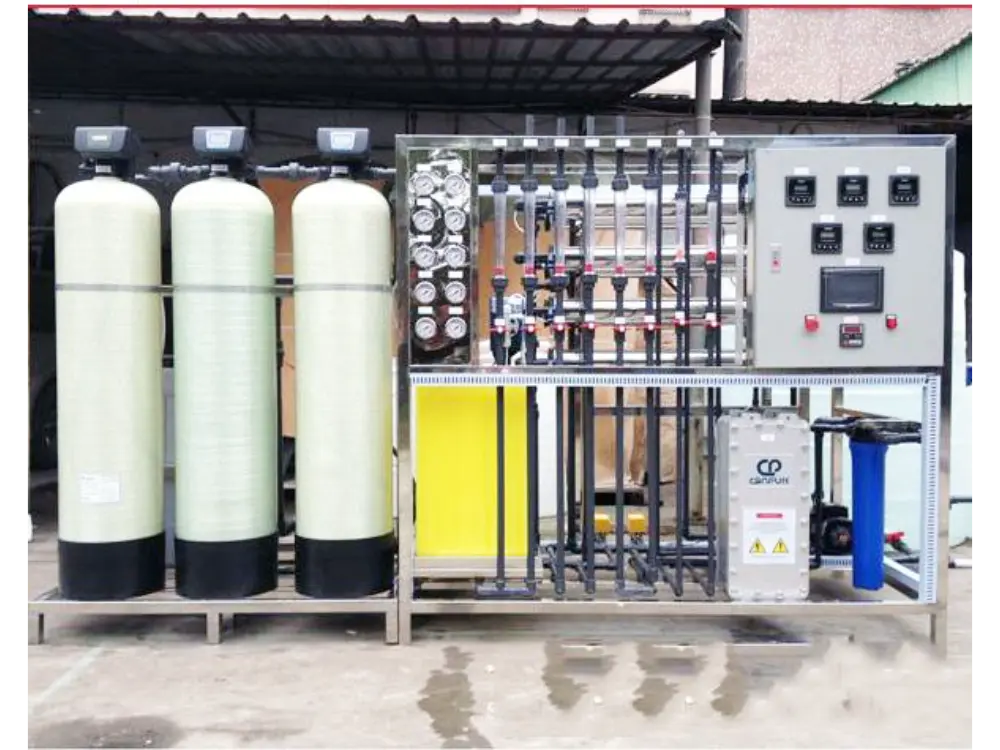
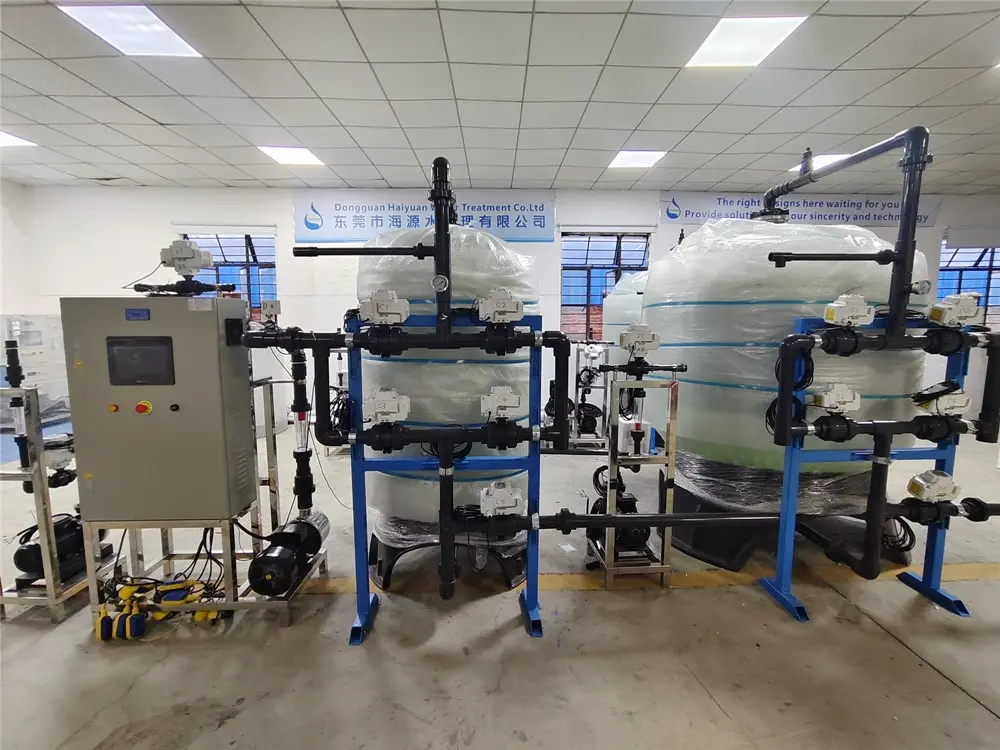
| Type | Configuration / Features | Applications |
|---|---|---|
| ① Double Bed System | Separate cation + anion resins; Suitable for general industrial deionization; Requires chemical regeneration | Industrial water |
| ② Mixed Bed DI System | Mixed cation + anion resins in one column; Higher purity than double bed; Often used as polishing after RO | Polishing after RO, laboratories, electronics |
| ③ Double Bed + Mixed Bed | Double bed for main ion removal + mixed bed for polishing; Produces stable, high-purity water | Sensitive industrial applications |
| ④ Sand + Carbon + Mixed Bed | Sand filter removes solids; Activated carbon removes chlorine & organics; Mixed bed for final polishing | Industrial ultra-pure water, precision manufacturing |
| ⑤ RO + EDI System | Continuous operation without chemical regeneration; Stable water quality | Electronics & pharmaceutical industries |
| ⑥ RO + EDI + Mixed Bed Polishing | Highest purity configuration; Combines RO, EDI, and mixed bed polishing | Semiconductor, laboratory, precision manufacturing |
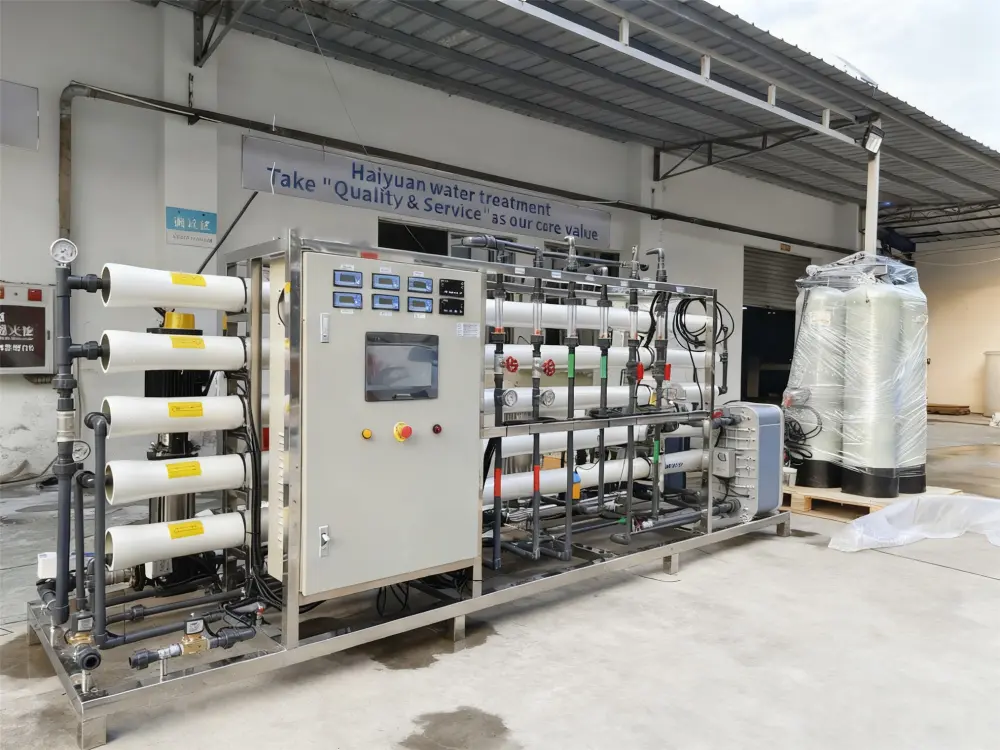
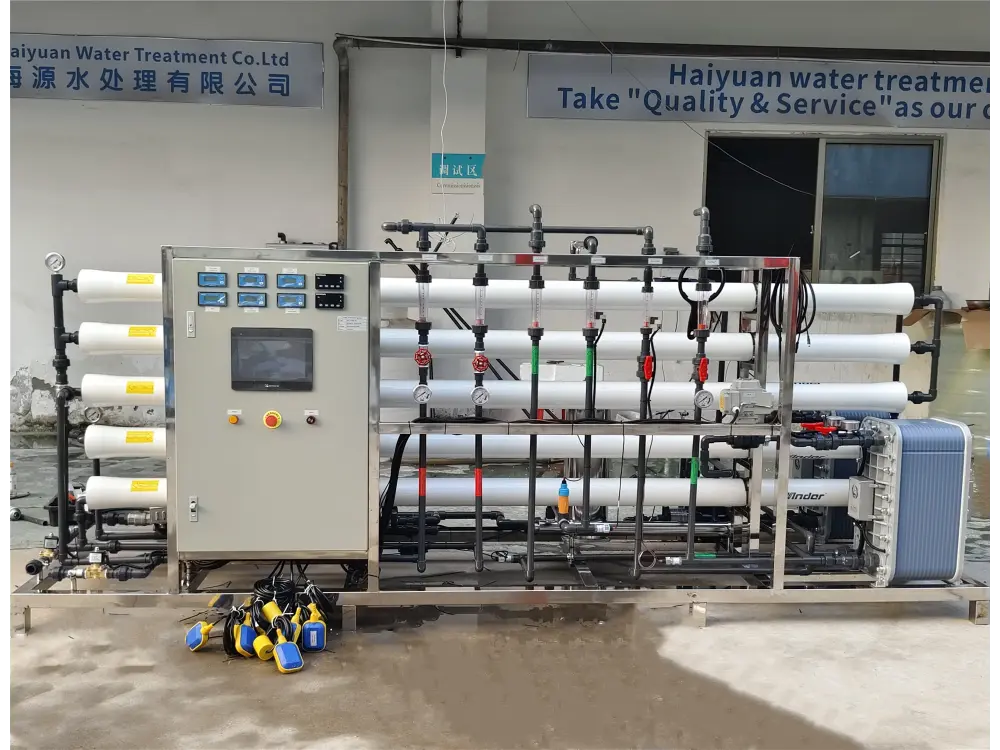
RO + EDI + Polishing Mixed Bed for Singapore battery factory
The client, located in Singapore, required a high-purity EDI water system capable of producing ultrapure water with a resistivity of 18.2 MΩ·cm. The water is used in a battery manufacturing plant, where consistent and stable quality is essential for critical production steps such as electrode preparation, electrolyte mixing, and precision cleaning.
To meet these strict requirements, Haiyuan engineered a 1.5 TPH Reverse Osmosis + EDI + Polishing Mixed Bed ultrapure water system. The fully automatic design ensures reliable and stable water production with low energy consumption, extended membrane lifespan, and minimal maintenance, making it ideal for continuous industrial operation.
Customer Requirements
-
Flow Rate: 1.5 T/h (1500 L/h)
-
Water Quality: Ultra-pure water with resistivity up to 18.2 MΩ·cm
-
Application: Battery manufacturing process water
Ultra-Pure Water Production Process
-
Raw Water Tank – stores feed water for the system.
-
Booster Pump – increases inlet water pressure for filtration.
-
Multimedia Filter – removes suspended solids and turbidity.
-
Activated Carbon Filter – removes chlorine, color, and odor.
-
Precision Filter – removes fine particles to protect RO membranes.
-
Primary High-Pressure Pump – feeds water into the first-stage RO system.
-
First-Stage RO – removes 95–99% of dissolved solids (TDS).
-
UV Sterilizer – inactivates bacteria and microorganisms.
-
1 µm Precision Filter – final filtration before RO water tank.
-
RO Product Water Tank – stores water from first-stage RO.
-
pH Adjustment Unit – stabilizes water pH for second-stage RO.
-
Secondary High-Pressure Pump – feeds water into second-stage RO.
-
Second-Stage RO – further reduces TDS and improves water quality.
-
EDI Booster Pump – supplies water to the EDI unit.
-
EDI (Electrodeionization) – continuously removes remaining ions, producing high-purity water.
-
EDI Product Water Tank – stores water after EDI treatment.
-
Polishing Mixed Bed Booster Pump – feeds water to the final polishing unit.
-
Polishing Mixed Bed (PMB) – further raises resistivity to 18–18.2 MΩ·cm, achieving ultra-pure water standards.
The system operates automatically with an Omron PLC control panel, ensuring continuous, efficient, and reliable performance for industrial, laboratory, and pharmaceutical applications.
Advantages of Deionized Water Plant
-
Produces high-purity to ultra-pure water
-
Easily achieves 10–18.2 MΩ·cm resistivity
-
Continuous production with EDI
-
No chemical regeneration required
-
Low energy consumption
-
High level of automation (PLC & touchscreen control)
-
Strong stability with real-time water quality monitoring
-
Can be containerized for easy transportation and installation
The difference between reverse osmosis water and DI water
Reverse Osmosis (RO) and Deionized (DI) water treatment processes both remove dissolved ions, but their performance and application differ significantly.
RO water has a medium deionization capability, typically removing 95–99% of dissolved solids. The produced water has a resistivity of 10–50 KΩ·cm, which is suitable for drinking water, domestic use, and general industrial applications. RO removes most ions but cannot completely eliminate them.
DI water, on the other hand, has a much higher purity level. Through ion exchange, it removes 99.9–100% of ions and produces water with a resistivity of 1–18 MΩ·cm. This makes DI water ideal for high-purity and ultra-pure applications, such as laboratories, electronics manufacturing, pharmaceuticals, and precision cleaning.
In summary, RO provides clean water for general use, while DI delivers ultra-low ion content water required for critical processes.
| Item | RO Water | DI Water |
|---|---|---|
| Deionization Capability | Medium (95–99%) | High (99.9–100%) |
| Resistivity | 10–50 KΩ·cm | 1–18 MΩ·cm |
| Ion Removal | Removes most ions | Removes nearly all ions |
| Typical Applications | Drinking water, domestic water, industrial water | High-purity & ultra-pure water |
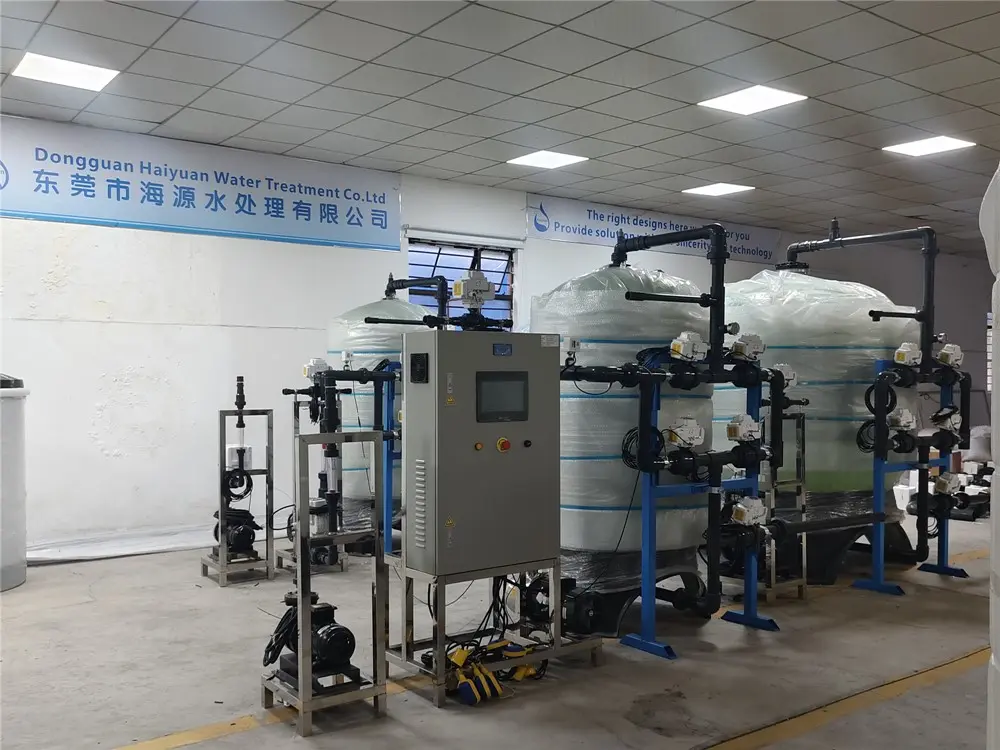
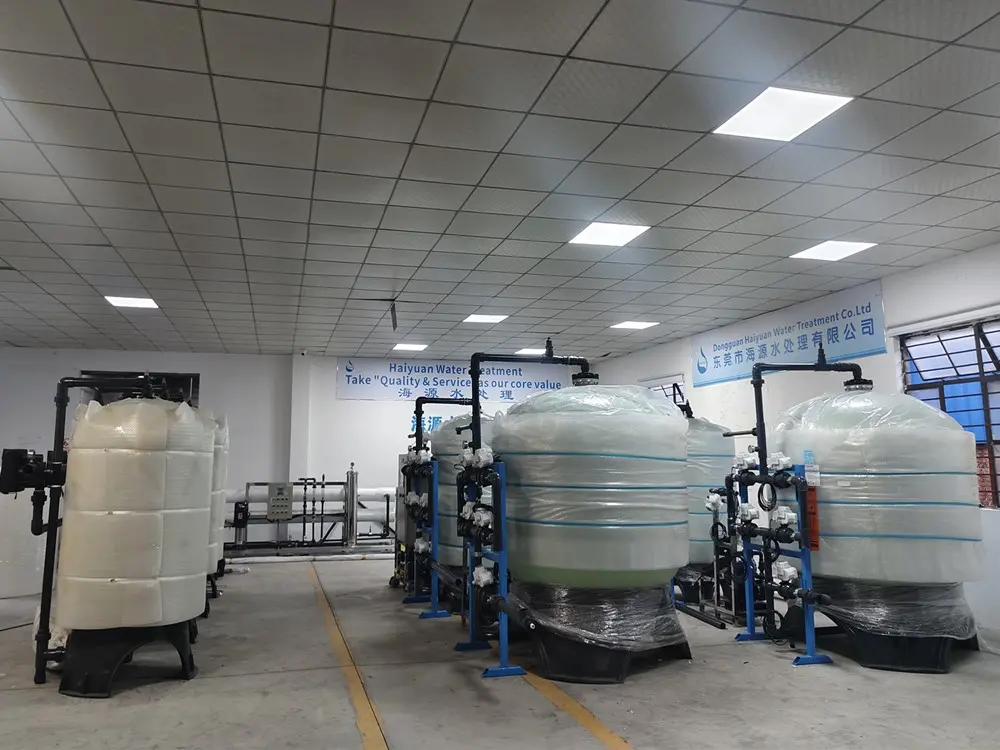
Information to Provide (Customer Guidance)
If you need a quotation or a customized DI/RO/EDI ultrapure water system, please prepare the following information:
1.Raw Water Source
Tap water / well water,TDS or conductivity level,Whether it contains iron, manganese, organic matter, etc.
2.Target Application
Electronics manufacturing, Pharmaceutical production, Laboratory use, Boiler feed water, Other industrial applications
3.Required Purity Level
1–10 MΩ·cm,10–18 MΩ·cm,18 MΩ·cm (ultra-pure water)
4.Required Capacity
0.5 T/h – 50 T/h (fully customizable)
5.Installation Type
Skid-mounted system , Containerized system (20ft/40ft)
6.Power Supply
380V/50Hz or local electrical standard
Contact US
Contact us for professional pre-purchase guidance and a free quotation.
Send us your raw water report and capacity requirements — our engineers will design the most suitable DI water solution for you.
Email: haiyuan@swroplant.com
Phone / WhatsApp:+86 18825874379