What is Industrial RO Reverse Osmosis Water Treatment Plant ?
Industrial Reverse Osmosis (RO) Water Treatment Plant is an essential water purification system designed for large-scale industrial applications. It utilizes reverse osmosis technology to remove impurities, dissolved salts, minerals, heavy metals, bacteria, and other harmful substances from raw water. The process ensures that the purified water meets the necessary quality standards required for industrial processes, drinking water, and other critical applications.

Process Flow of Industrial RO Plant
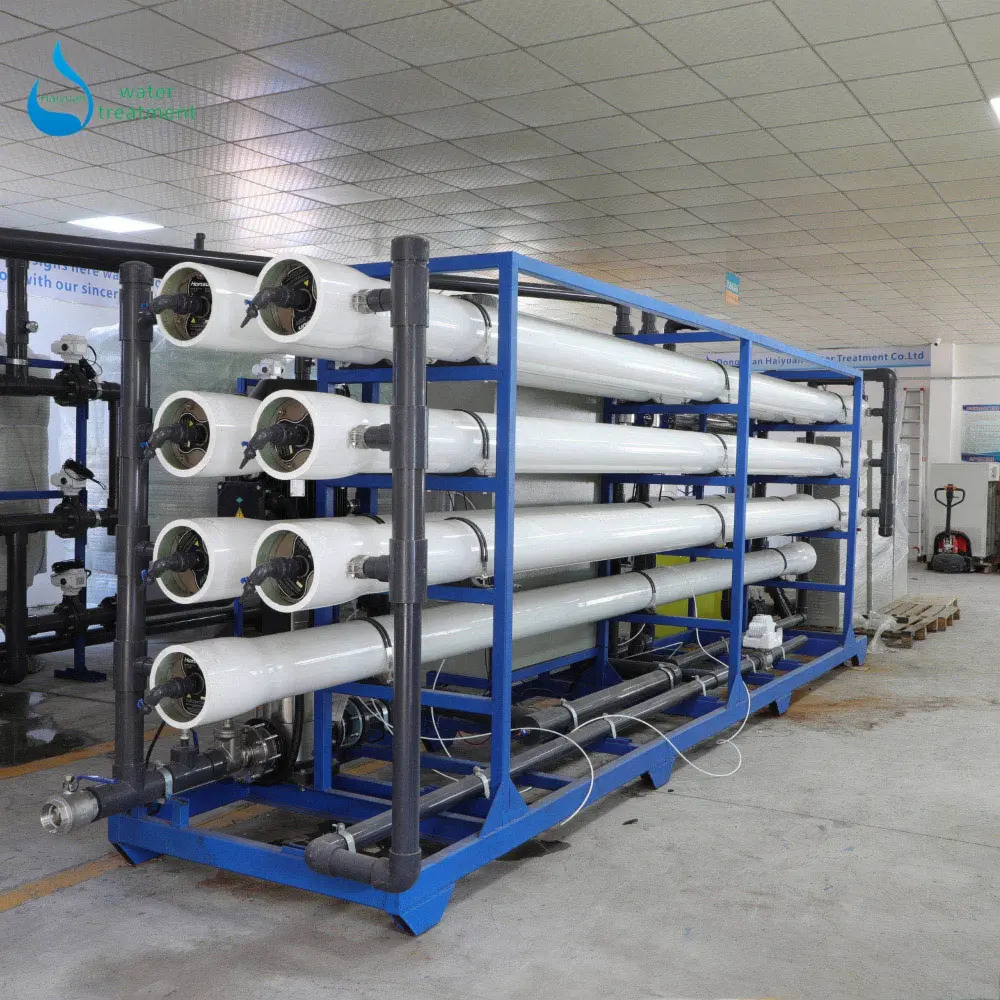
An Industrial RO Plant functions by pushing water through a semi-permeable membrane at high pressure. The membrane allows only water molecules to pass through, while blocking contaminants and other impurities. This ensures that the output water is free from salts, minerals, and microorganisms, resulting in purified, high-quality water.
Key components of an industrial RO plant include:
-
Pre-treatment system: Filters out larger particles and impurities before water reaches the RO membranes.
-
RO membranes: The core component, filtering out dissolved solids and contaminants.
-
High-pressure pump: Ensures that water is pushed through the membranes under the necessary pressure for filtration.
-
Post-treatment system: Ensures that the treated water is suitable for use, often involving UV sterilization or mineral addition.
Applications of Industrial Reverse Osmosis Plant
Industrial RO systems are used in various sectors, including:
-
Manufacturing: For producing ultra-pure water for electronics and semiconductor manufacturing.
-
Food and Beverage: To provide clean water for production processes, as well as meet hygiene and safety standards.
-
Pharmaceuticals: For producing water that complies with strict purity standards for drug production.
-
Power Generation: For cooling and boiler feedwater treatment in power plants.
-
Mining and Oil & Gas: To treat water used in mining processes and oil extraction.
-
Desalination: Used in coastal areas where seawater is desalinated to provide fresh water.


Why Choose an Industrial RO Plant?
-
Efficiency and Reliability: Industrial RO plants provide highly efficient water treatment, ensuring continuous and reliable operations.
-
Cost-Effective: Compared to other purification methods, reverse osmosis offers a low operational cost with minimal maintenance.
-
Scalability: RO systems can be customized for varying production capacities, from small-scale operations to large industrial facilities.
-
High Water Quality: RO ensures that water meets the highest purity standards, ensuring safe and optimal use in industrial processes.
Types of Industrial RO Reverse Osmosis Plant
-
Containerized RO Systems: These are pre-assembled systems installed in containers for easy transport and quick installation. They’re ideal for industries with space constraints or for projects that require flexibility in deployment.
-
Multi-Stage RO Systems: These systems are used when raw water is highly contaminated, as they use multiple stages of filtration to produce extremely pure water.
Case About Industrial reverse osmosis system 45TPH -Guatemala
Customer need:
-
Total Hardness: 192ppm (hard water)
-
Conductivity: >200 µS/cm (dissolved salts present)
-
TDS: 112ppm (high total dissolved solids)
The plant required TDS to be reduced to ≤2ppm to meet production water quality standards, while considering limited space in the production area.
Process Flow:
-
Raw Water Treatment:
-
Automatic Chlorination: Disinfects raw water, removing bacteria.
-
Raw Water Tank: Stores treated water for consistent supply.
-
Booster Pump: Increases pressure to push water through further treatments.
-
-
Pre-Treatment:
-
Quartz Sand Filter: Removes larger particles.
-
Activated Carbon Filter: Removes chlorine and organic compounds.
-
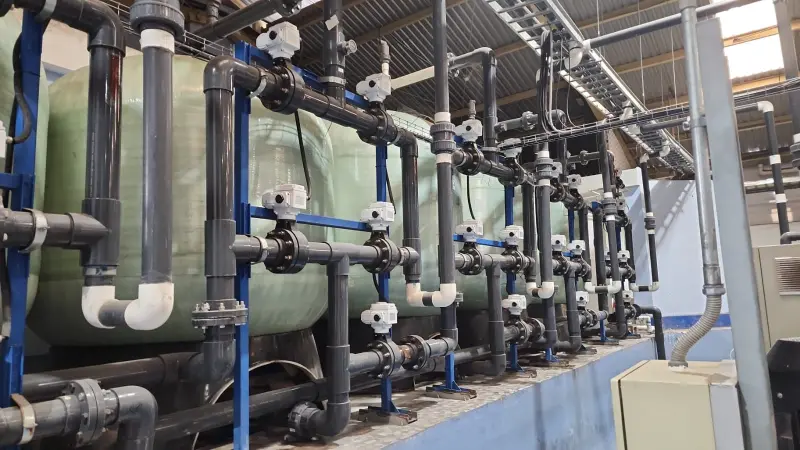
Water Softener: Removes hardness, preventing scaling.
-
Chemical Dosing: Adds anti-scalant and reducing agents.
-
Precision Filter: Filters out fine particles.
-
-
RO System:
-
High-Pressure Pump: Increases pressure to force water through RO membranes.
-
42 High-Performance RO Membranes: Removes 99% of dissolved solids, ensuring TDS ≤ 2ppm.
-
-
Post-Treatment:
-
UV Disinfection: Ensures water safety by killing bacteria.
-
Electric Butterfly Valves: Fully automated operation with automatic backwashing to reduce manual work.
-
-
Water Storage Tank: Stores treated water for use in production.
System Features:
-
Compact Design: Saves space, ideal for factories with limited room.
-
Full Automation: Automatic backwashing and operation reduce the need for manual intervention.
-
High-Efficiency Membranes: 42 membranes ensure high purification performance.
-
Energy Efficient: Energy recovery reduces operating costs.

Key Info to Consider When Choosing an Industrial RO Plant
-
Capacity and Flow Rate: Industrial RO plants are available in various sizes and capacities. Choose one based on your production water requirements.(1000lph to 50m3ph)
-
Water Quality: Assess the quality of the raw water available to determine the type of filtration required.(sea/well/brackish/undeground water)
-
Power: (/380V/440V/460V, 50 or 60 Hz) 3 phase.
-
Maintenance Requirements: Choose a system that is easy to maintain and offers long-term reliability.
-
Customization: Many industrial RO plants are customizable to fit specific industrial needs, such as specific flow rates, water quality, or system design.
An Industrial RO Plant is a highly effective water purification system essential for industries requiring large amounts of high-quality water. From manufacturing to power generation, industrial RO plants provide a sustainable, cost-effective, and reliable solution for treating water, ensuring it meets the stringent demands of various industries.
Contact Us
-
Email: haiyuan@swroplant.com
-
Phone: +86 18825874379
Our team is ready to provide you with customized solutions and answers to all your water treatment needs.