
What Should You Know Before Choosing a Water Desalination Plant?
Why Water Desalination Plants Are Essential?
Freshwater is limited around the world, and people living near the coast often don’t have enough. Desalination plants can turn seawater into clean drinking water, making sure homes, farms, and factories always have enough water for daily use.
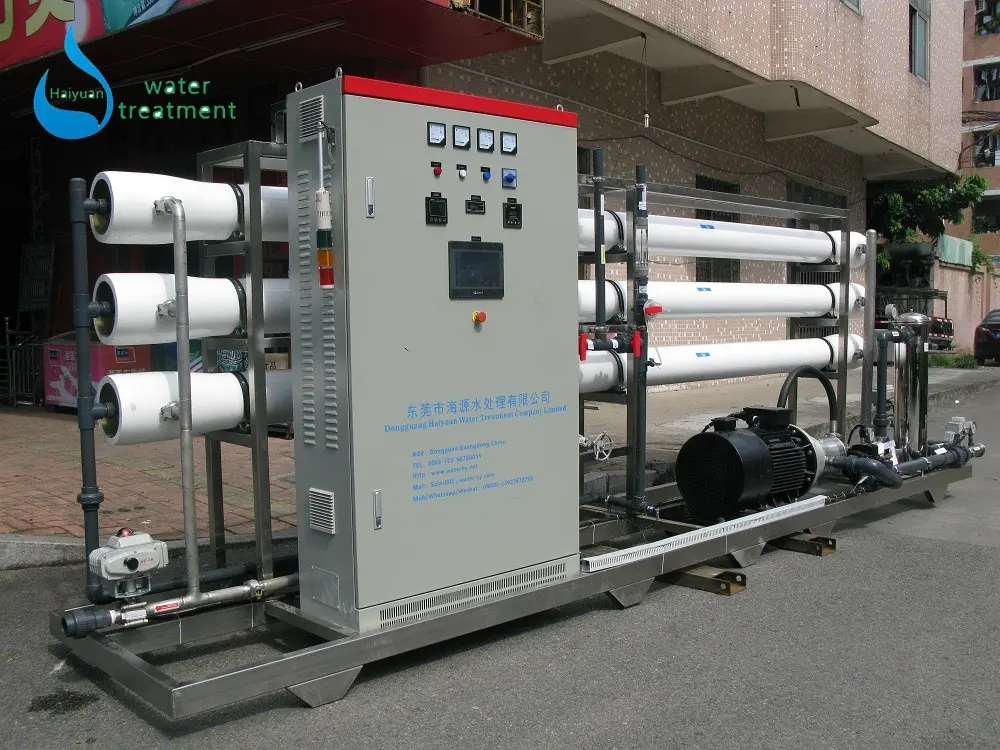
What Is a Water Desalination Plant?
It’s easy to understand that seawater desalination is the process of converting seawater, or water with high salt content and impurities, into fresh water.
Haiyuan Water Treatment’s main capacity ranges from 50L/hr to 50m³/hr
The most common method is reverse osmosis (RO). In this process, seawater is pushed through a semi-permeable membrane that only lets water molecules pass. Salt, impurities, bacteria, and other dissolved substances are left behind. The water that comes out is clean and safe, ready for drinking, household use, industry, or agriculture.
About Reverse Osmosis Seawater Desalination Treatment Plant Process:
Raw water tank — Feed water pump — Multi-media filter — Antiscalant dosing system — 5µm precision filter — 1µm precision filter — High-pressure pump — RO (with CIP) — Product water tank.
Step-by-step explanation:
1.Raw water tank and Product water tank: We recommend that customers prepare their own supplies or purchase locally to save on shipping costs.
2.Feed water pump:Ensure enough pressure at the inlet to transport seawater to the pre-treatment section for filtration.
3.Multi-media filter: Multimedia filtration is the most important pre-treatment core in seawater desalination. It is used to remove silt, suspended solids, colloids and biological particles from seawater, reduce SDI (Silt Density Index), protect SWRO membranes, extend membrane life and ensure stable water production.
4.Anti-scalant dosing system:It prevents minerals such as calcium, magnesium, sulfate, and carbonate in the water from forming scale on the surface of the RO membrane, thus protecting the membrane from clogging.
5.5µm precision filter: Removes medium-sized particles such as sand, rust, and larger suspended solids.
6.1µm precision filter:Removes very fine particles and tiny impurities to ensure the water is clean enough for the RO membranes and helps maintain stable pressure.
7.High-pressure pump:Seawater is pressurized to a sufficiently high pressure to pass through a reverse osmosis membrane. Only under high pressure can water molecules overcome the osmotic pressure of the seawater and move from one side of the membrane to the other, achieving a desalination effect.
8.Reverse Osmosis and CIP
SWRO removes most of the salt, impurities, and microorganisms from seawater, producing clean freshwater.
CIP (Clean-In-Place) allows the RO membranes to be cleaned automatically without disassembly, removing scale, fouling, and other buildup.
Together, RO with CIP ensures stable operation, high water quality, and longer membrane life.
This process is a common method for seawater desalination and is typically used to treat seawater with a TDS of around 35,000 ppm. We design and adjust the system based on each customer’s specific raw water conditions.
Know your water before buying a treatment plant! Check its TDS and get a water analysis report to choose the right solution.
| Water Source | TDS Range (mg/L) | Notes / Remarks |
| Seawater | Typically ≥ 35,000 | Mainly contains sodium chloride and other salts |
| Well/borehole Water | 50 – 1,000 (some highly mineralized wells may exceed 1,000) | Varies depending on geological conditions |
| Brackish Water | ≥ 3,000 | High-salinity groundwater or industrial concentrated water |
| Groundwater | 50 – 3,000 | In limestone areas, may exceed 1,000 |
| Tap / Municipal Water | ≤ 1,000 (average ~250) | Standard ≤ 1,000 in China |
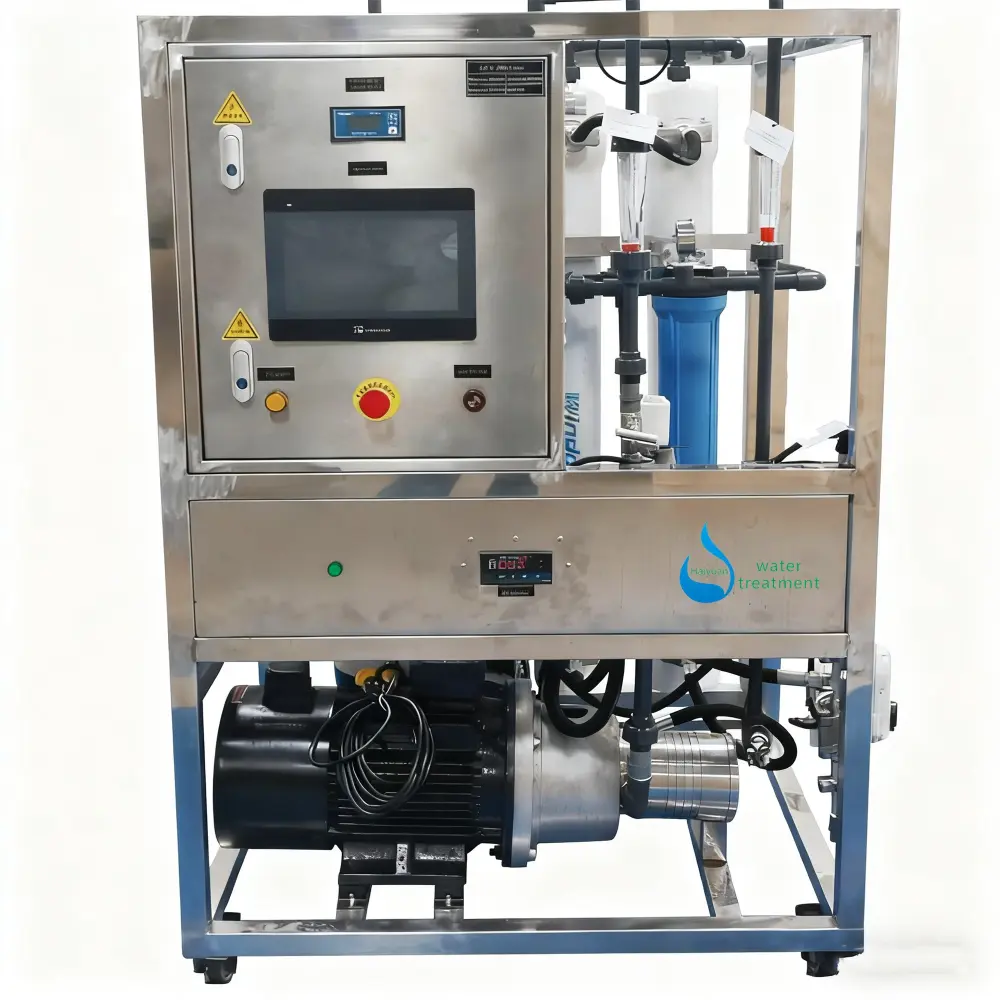
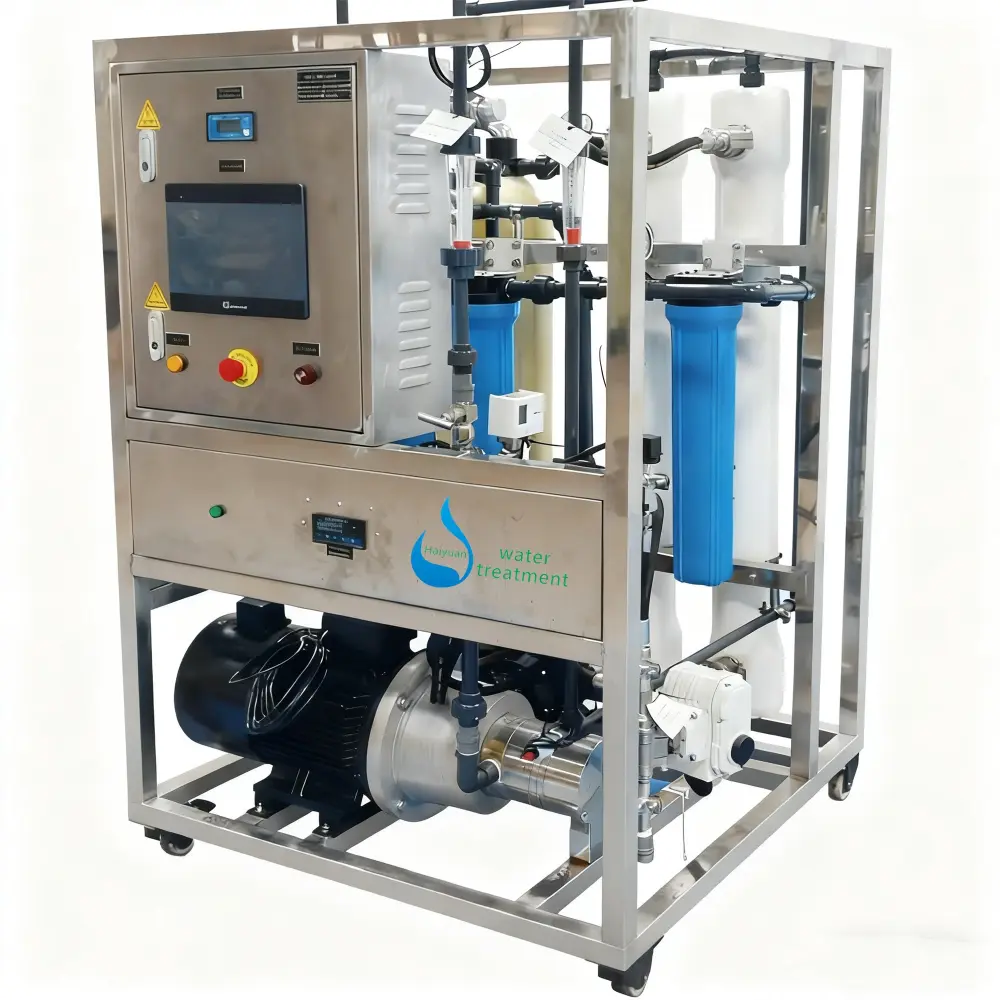
Applications of Water Desalination Plant
-
Marine and ship applications, providing reliable freshwater for vessels, yachts, and offshore platforms.
-
Commercial use, such as hotels, resorts, hospitals, and business complexes that require a continuous clean water supply.
-
Household and domestic use, delivering safe drinking water in coastal homes or remote residences.
-
Emergency and disaster relief operations requiring fast-deployable mobile desalination units.
-
Agricultural irrigation in regions with limited freshwater resources.
Furthermore, desalination technology is increasingly being adopted by private developers, local governments, and industrial investors as a long-term water management strategy for sustainable growth.
The Benefits of Modern Seawater RO Plants
1. Technical Advantages
-
Advanced Reverse Osmosis (RO) Technology: High desalination rate, removing over 99% of salts and impurities.
-
Modular Design: Containerized or modular systems allow flexible expansion or relocation.
-
CIP (Clean-In-Place) and Automated Control: Ensures long-term efficient membrane operation and reduces maintenance frequency.
-
Integration with Renewable Energy: Solar, wind, or hybrid systems can reduce energy consumption and improve sustainability.
2. Application Advantages
-
Residential Water Supply: Provides safe drinking water and household water.
-
Industrial Water Supply: Suitable for industries requiring high-purity water, such as food processing, electronics, and pharmaceuticals.
-
Agricultural Water Supply: Can be used for irrigation in water-scarce areas, improving agricultural water security.
-
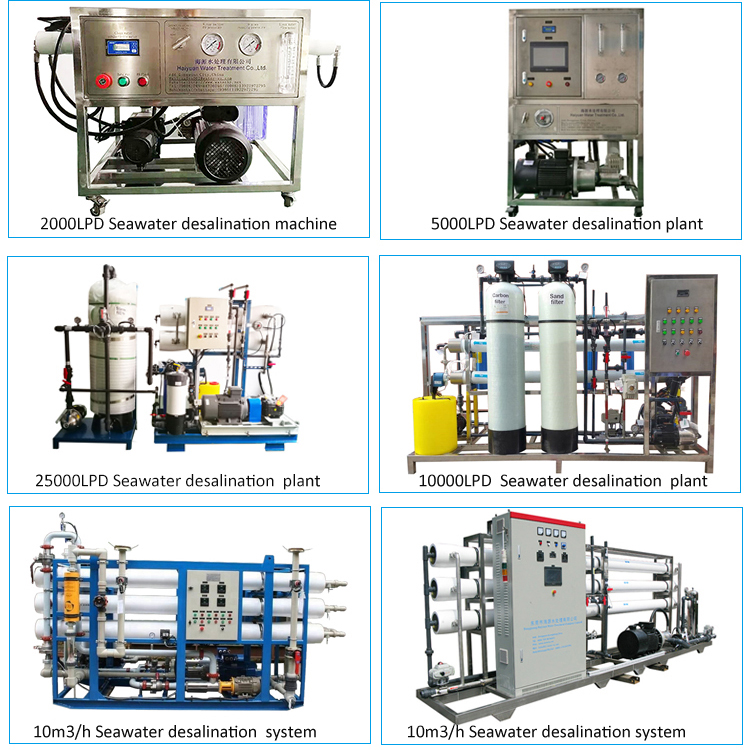
Flexible Layout: Can be built as large-scale municipal plants or small/mid-size mobile/containerized systems to meet different needs.
3. Water Production Advantages
-
Stable and Reliable: Seawater is abundant and not affected by rainfall or seasons.
-
Customizable Output: Small systems produce tens of liters per hour; large systems can reach tens of thousands of cubic meters per day.
-
High Water Quality: Clean water with low TDS, suitable for drinking or industrial use.
-
Continuous Supply: Designed for long-term, stable operation to meet peak water demand.
Why Choose a Customized Solution?
Every water source is unique; therefore, factors like TDS level, temperature, and intended use must be considered. That is why professional manufacturers provide custom-engineered desalination systems tailored to specific needs.
A well-designed solution not only enhances efficiency but also extends membrane lifespan and lowers long-term operating costs.
In other words, customization ensures that every drop of water is produced in the most cost-effective and environmentally responsible way possible.
Conclusion
As global water scarcity intensifies, water desalination plants are becoming a cornerstone of sustainable development. They provide a dependable water source for remote islands, industrial sites, and municipal projects alike.
Ultimately, investing in a reliable desalination system ensures long-term water security, operational stability, and environmental responsibility.
If you are looking for a custom-built seawater desalination plant designed to match your source water and capacity needs, our team can deliver a complete turnkey solution — from design to installation — ensuring pure, safe water wherever you are.
📩 Contact us today to get a free consultation and customized proposal for your project.
Email: haiyuan@swroplant.com
WhatsApp: +86 18825874379